

Programme certainty
Parallel off-site and on-site workstreams, fewer weather disruptions, and compressed critical paths.
transforming construction
Kapitol is investing in Modern Methods of Construction (MMC) to change how buildings get built in Australia. At the centre of this is Volumetric Modular Construction (VMC) — purpose-built for large-scale, repeatable residential projects where programme, quality and delivery certainty matter most.
Parallel off-site and on-site workstreams, fewer weather disruptions, and compressed critical paths.

Earlier design resolution, reduced on-site coordination, and fewer late-stage contract variations.

Factory-controlled QA, repeatable details, and consistent tolerances across every module.

Fewer on-site labour hours, safer working environments, and reduced waste streams.
Volumetric Modular: Australia's Next Chapter
Andrew Deveson sits down with ICD Property's Matthew Khoo, Kapitol's Andrew Morrison, and AsheMorgan's Mat Stoddart to unpack why volumetric modular construction has stalled in Australia and what's finally shifting.
From Singapore's PPVC mandate to the UK's high-profile collapses, the conversation digs into where modular actually stacks up commercially, how design, finance and planning need to align, and what it will take to move beyond pilots into a scaled, repeatable industry delivering homes, hotels and student accommodation faster.

Andrew Morrison, Head of Modular"A national appetite for faster, more predictable delivery is driving Kapitol’s investment in modular innovation"
A Turnkey Solution for Mid to High Density Residential Projects
Kapitol has built a proven VMC capability for mid- and high-rise residential projects. Since early 2025, we have:
Built a VMC delivery model – Assembled and trained a national network of consultants and trade partners in Kapitol's VMC methodology.
Partnered with a global module supplier – Selected a manufacturer with a track record of 50,000+ modules delivered worldwide, giving clients scale and delivery certainty.
Applied global lessons learned – Engineered module designs that resolve the issues that have challenged past VMC projects, from logistics and storage through to installation.
De-risked approvals and financing – Engaged insurers, financiers and regulators up front to clear the roadblocks that typically slow VMC projects down.
Led Multiple ECI Tenders – Led multiple ECI and Tender processes collaborating with multiple project stakeholders to provide a turnkey solution for our clients.
Developed Prototype Modules – Worked with national trades and consultant teams to develop NCC-compliant residential module prototypes (for PBSA, Studio, & 1BDRM apartments) to demonstrate viable solutions to clients.
kapitol's vmc approach
Kapitol's VMC approach integrates every stage of delivery, from concept through handover:
Early design coordination – Our in-house 3D BIM, design management and structural, façade and services engineering teams lead the DfMA process from day one.
Manufacturing-led planning – 3D installation methodologies and program alignment with our supplier enable parallel site and factory activity.
Integrated logistics – Controlled transport, installation and handover under a single chain of custody.
Purpose-built QA – A bespoke VMC quality system that extends our existing procedures, meets Australian regulatory requirements, and aligns with international frameworks including BOPAS.
Robust commercial models – Procurement and contracting structures developed by staff trained through the UNSW Legal Essentials for Offsite Construction program, giving clients confidence in Kapitol as Head Contractor.
The result is a scalable volumetric solution delivered end-to-end by one integrated team — built for repeatability and continuous improvement, not a one-off add-on.
The following key benefits of Kapitol’s VMC approach have been realized and documented.
<iframe width="560" height="315" src="
" title="YouTube video player" frameborder="0" allow="accelerometer; autoplay; clipboard-write; encrypted-media; gyroscope; picture-in-picture; web-share" referrerpolicy="strict-origin-when-cross-origin" allowfullscreen></iframe>Kapitol's VMC model is built for residential developments where supply chain constraints, particularly in Queensland and regional centres, or tight programmes threaten developer IRR. By compressing construction timelines, we bring forward occupation and operational revenue.
These applications suit VMC because they share:
Repetition and standardisation across units
Tight programme drivers tied to revenue or handover dates
Owner-operators with long-term quality and performance expectations
Rigorous investment and financing due diligence that VMC's controlled process readily satisfies
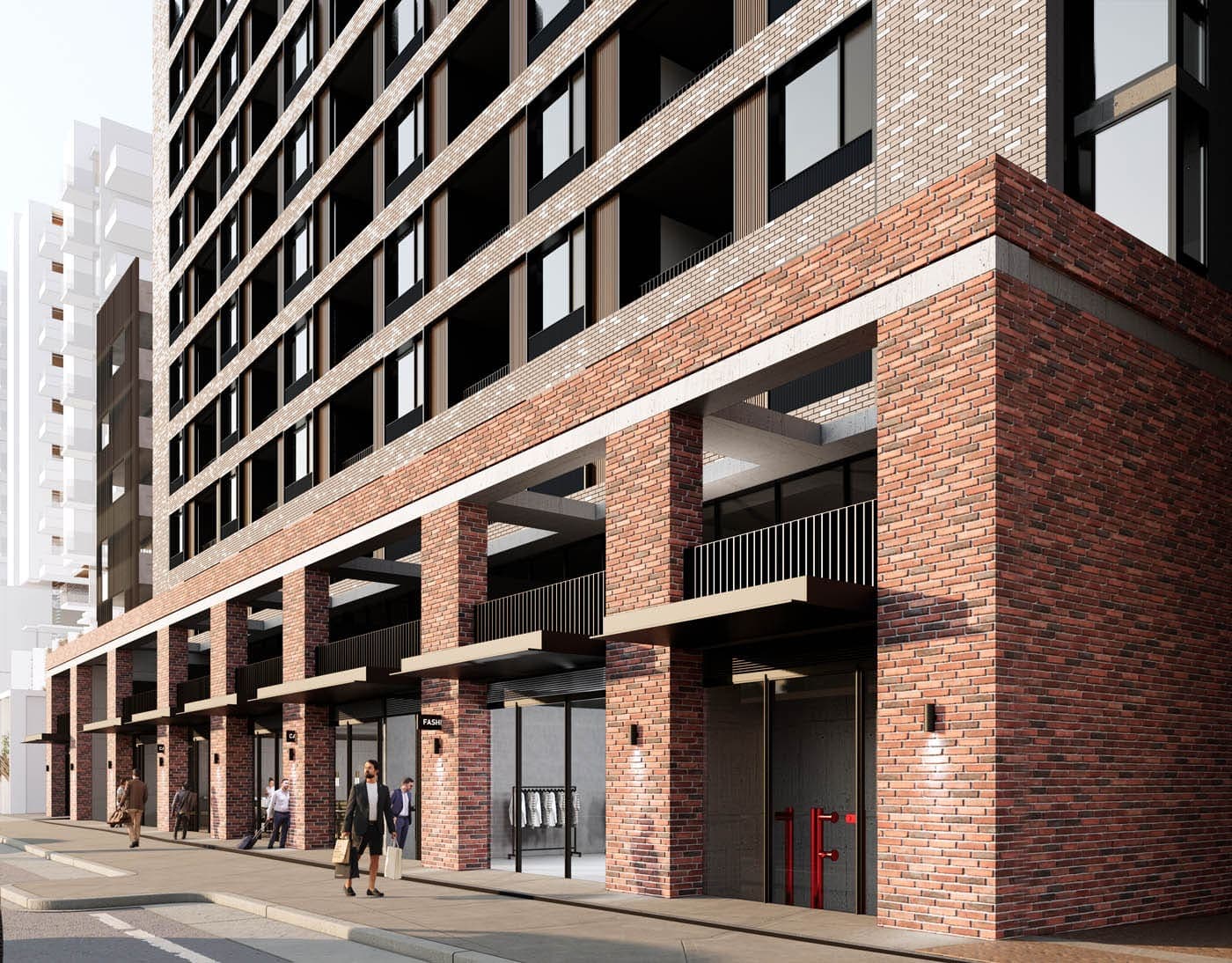

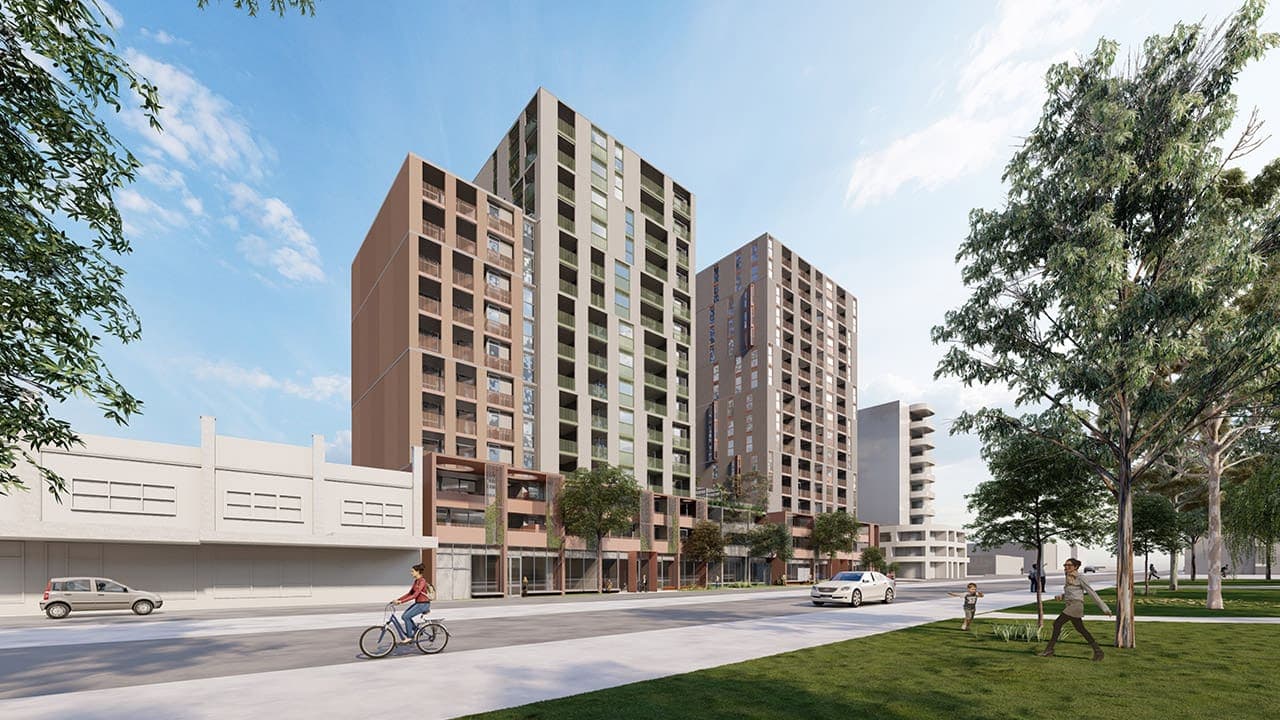
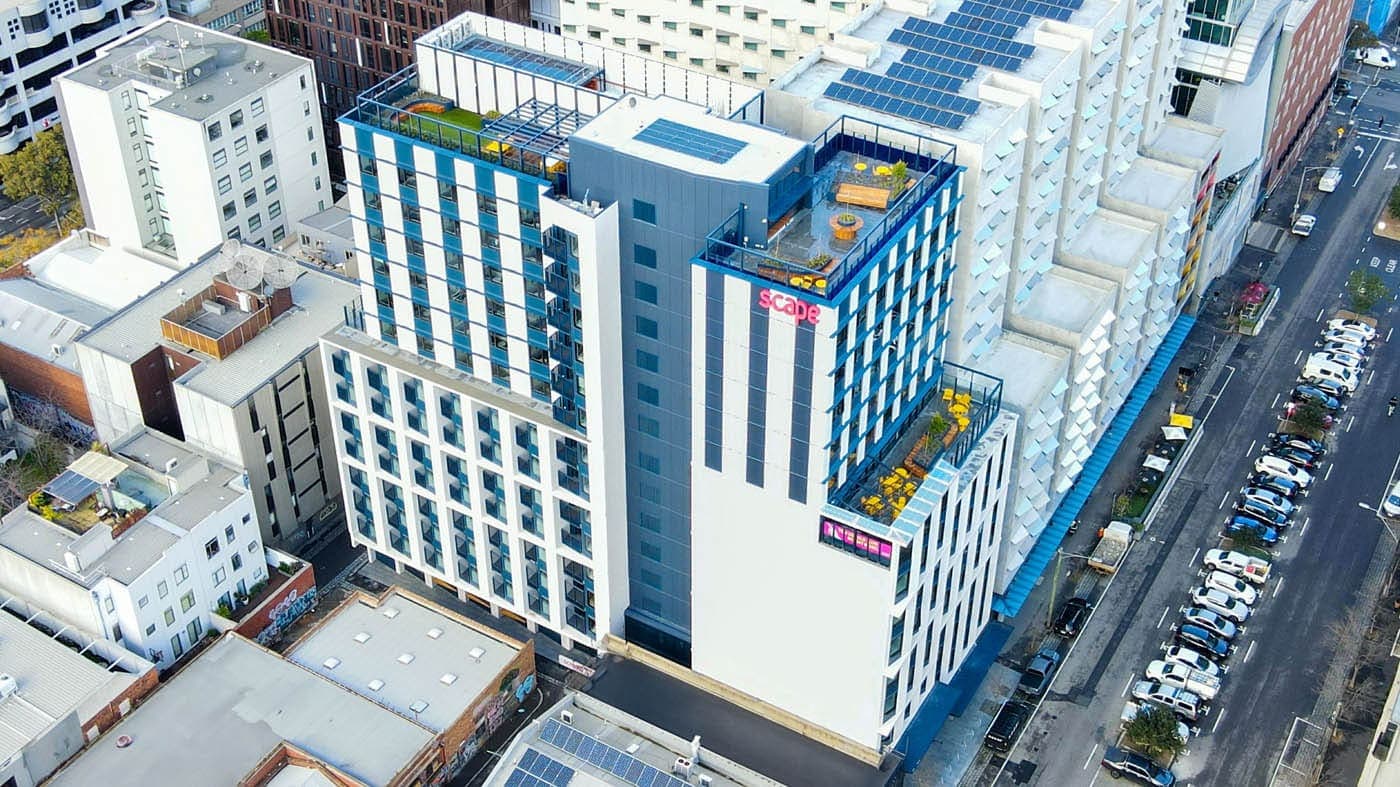


Advancing modular construction in Australia
Kapitol is helping shape the future of modular delivery in Australia through active industry engagement:
Industry speaking engagements – Invited to contribute to panels, seminars and conferences on offsite and volumetric construction.
PrefabAus membership and advocacy – Active member contributing to industry standards, policy development and knowledge-sharing.
Thought leadership – Sharing practical lessons from our VMC programme with clients, partners and the wider industry.
Volumetric modular construction should be considered at concept design and embedded no later than early schematic design. Modular delivers its greatest value when the building is designed for manufacture, rather than attempting to retrofit modular principles into a conventional scheme. Early consideration allows key spatial, structural, services, façade, fire, and logistics decisions to be resolved upfront and coordinated as an integrated system.
Kapitol’s experience shows that early modular engagement enables:
- Optimised module dimensions aligned with transport and cranage envelopes
- Rationalised structural grids and load paths
- Early services zoning and riser coordination
- Defined façade strategy and tolerances
- Early authority engagement and compliance sign-off prior to manufacture
Late-stage conversion to modular typically erodes program, cost, and risk benefits and is generally not recommended.
Modular construction introduces different constraints to traditional construction, primarily driven by manufacturing, transport, and installation requirements. These are not disadvantages, but they do require early design discipline. Key limitations and drivers include:
Module size and weight constraints
Driven by transport regulations, shipping logistics, cranage capacity, and safe lifting requirements.
Structural grid regularity
Modular performs best with regular, vertically aligned grids. Irregular grids or transfers can increase cost and complexity.
Early design freeze requirements
Modular requires earlier design resolution to enable manufacturing certainty, prototype approval, and compliance sign-off prior to production.
Façade and tolerance management
Modular introduces cumulative tolerances (factory + transport + installation), requiring façades to be detailed to accommodate movement and alignment.
Acoustic and fire interface detailing
Performance is driven by how modules connect, not just individual module performance, requiring early coordination across disciplines.
These constraints are manageable and well understood when modular is adopted deliberately from the outset.
Volumetric modular construction is best suited to accommodation-led projects with high levels of repetition, where speed, certainty, and consistency directly influence commercial outcomes. Typical best-fit project types include:
Hotels: highly repeatable guestrooms, bathrooms and services risers; strong operator focus on quality consistency and early opening.
Purpose Built Student Accommodation (PBSA): repetitive studio layouts, accelerated delivery aligned to academic intake cycles, strong yield optimisation.
Build-to-Rent (BTR): repeatable apartment typologies, early revenue generation, long-term asset performance and durability focus.
Kapitol’s modular capability has been shaped specifically around these typologies, drawing on global precedent projects delivered up to 48 storeys and more than 50,000 modules internationally, supported by a track record across APAC, Europe and North America.
Key elements include:
- Fire-rated wall, floor, and ceiling assemblies achieving required FRLs (tested and/or supported by performance solutions)
- Fully integrated fire stopping, penetration protection, and compartmentation inspected prior to module closure
- In-module fire services (sprinkler drops, collars, penetration protection) installed and certified in the factory
- Centralised fire systems (pumps, tanks, detection and alarm panels) retained at building level
- Performance Solutions where required, peer reviewed and approved by the Building Surveyor and Fire Rescue Victoria
Crucially, compliance is verified before shipment, reducing reliance on retrospective site inspections and providing confidence to regulators, funders, and insurers.
Façade strategies generally fall into three categories:
Fully integrated façades (factory installed)
- Highest level of quality control and weatherproofing
- Earlier enclosure and program certainty
- Façade strategies generally fall into three categories:
Hybrid façades (partial factory + site installation)
- Common approach balancing QA and architectural flexibility
- Windows, insulation and membranes installed in factory; outer cladding completed on site
Fully site-installed façades
- Maximum architectural flexibility
- Reduced transport risk
- Greater reliance on site conditions and sequencing
The optimal approach is project-specific and driven by height, façade articulation, tolerance strategy, logistics, and client priorities.
Cost outcomes vary by project, but modular construction consistently improves cost certainty and can deliver savings through:
- Reduced site preliminaries and overheads
- Lower rework and defect rates
- Reduced labour volatility
- Accelerated revenue generation
In documented case studies, modular overlays have delivered:
- Construction cost reductions of approximately 10%
- Significant preliminaries savings
- Improved yield through more efficient planning and reduced plant space
The strongest financial benefit is often risk reduction and predictability, which is particularly attractive to financiers and long-term asset owners.
The primary program benefit comes from parallel workstreams:
- Module manufacture occurs offsite while site works (basement, core, transfer structure) progress simultaneously.
- Installation is rapid and highly predictable once modules arrive.
Documented outcomes from comparable modular accommodation projects include:
- Overall construction programs reduced by 20–35%
- Earlier building enclosure and commissioning
- Improved certainty around completion and occupancy dates
- Reduced exposure to weather, labour availability, and interface delays
Kapitol’s own modular overlay studies have demonstrated program reductions of several months on high-rise PBSA projects, directly improving revenue timing.
Services are typically delivered using a hybrid strategy:
Integrated within modules
- Fan coil units, exhaust fans, bathroom and kitchen plumbing
- Fire sprinklers and penetration protection
- Fully installed, tested and inspected in the factory
Centralised at building level
- Major plant (chillers, fire pumps, tanks)
- Vertical risers and distribution mains
- Systems requiring future flexibility or redundancy
Early coordination is critical to optimise interfaces between modules and central plant and minimise site connection risk.
Modern volumetric modular systems are capable of high-rise delivery, with global precedents exceeding 40 storeys in residential and accommodation sectors. Vertical limits are driven by:
- Structural design and lateral stability strategy
- Wind, seismic and movement criteria
- Fire and egress strategies
- Cranage and installation methodology
Australian projects are increasingly approaching global benchmarks as regulatory familiarity and industry capability mature.
Shipping risk for modules is no different to shipping risk for any traditional construction elements such as curtain wall. Risk is managed through a combination of engineering, logistics planning, insurance, and contingency strategies, including:
- Modules engineered specifically for transport and lifting loads
- Purpose-designed packaging and handling procedures
- Marine and transit insurance covering loss, damage and program impact
- Inspection and certification prior to shipment
- Contingency planning for replacement or resequencing if required
Kapitol treats logistics as a core delivery workstream, not an afterthought, ensuring program and quality risks are actively managed .
As one of Australia's most innovative construction companies, Kapitol has invested significantly in developing modern methods of construction, including advanced offsite prefabrication and volumetric modular construction, to help drive efficiencies in construction delivery and address trade constraints. With a strong vision for modular’s future in Australia—and a talented team ready to lead it--Kapitol is transforming construction, transforming life, and defining a smarter, safer, more efficient way to build.