
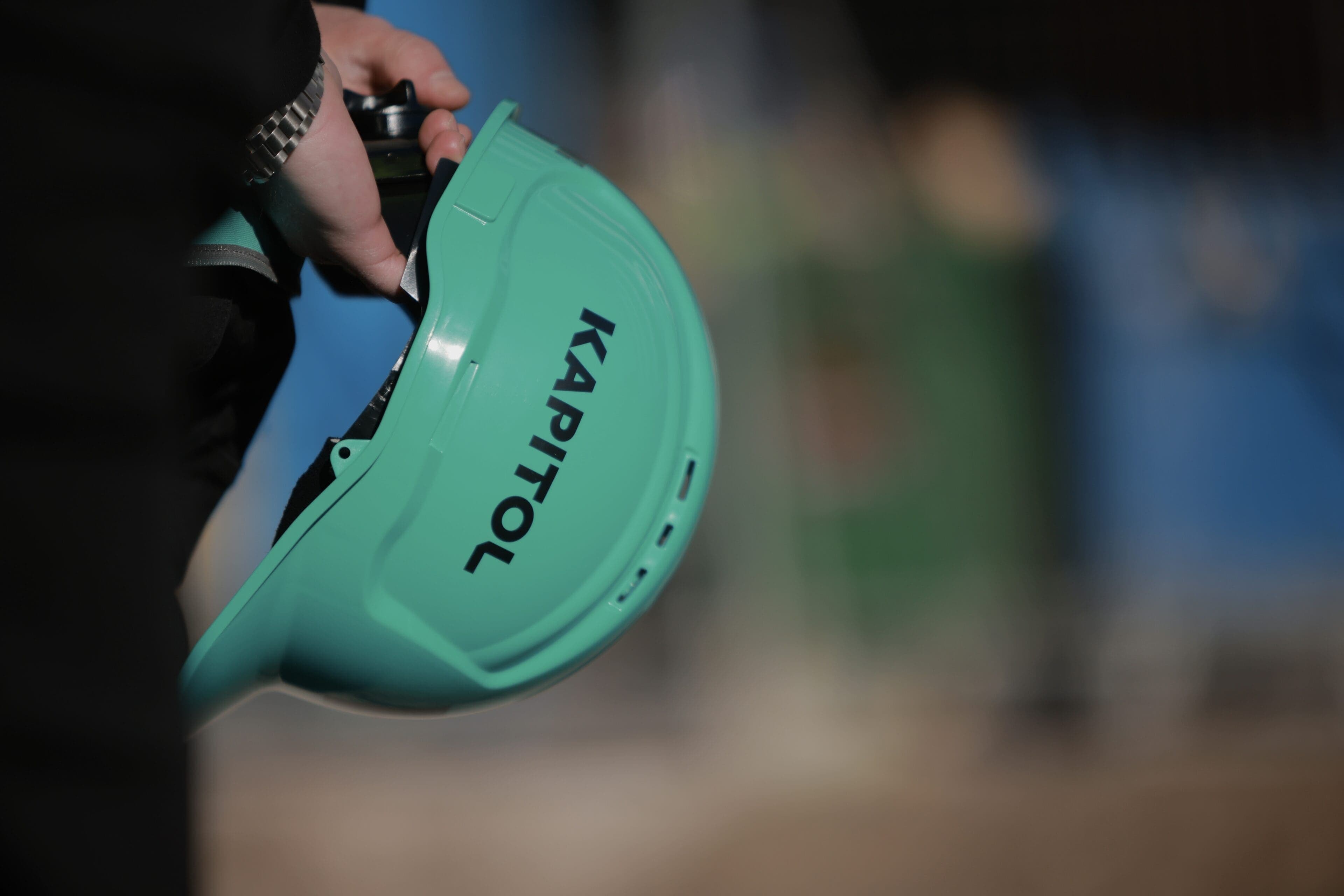
Innovation, determination and common sense. From High-Risk Workshops to our groundbreaking 6 Points of PPE, Kapitol is creating a safety culture and dynamic that is setting new standards across the industry while ensuring our people and trade partners work safely, always.
Laura Doyle, Safety AdvisorKNOWING WE’VE DELIVERED WHAT A CLIENT WANTS EXACTLY WHEN IT’S NEEDED, AND WE’VE DONE SO WITHOUT AN INJURY OR INCIDENT OVER THE COURSE OF THE PROJECT IS WHAT FULFILS ME IN MY ROLE.
| Site safety for our employees, visitors, contractors, and the public is a top priority. With a dedicated team of experienced HSE professionals, we reduce incidents and injuries with the aim of zero harm. Our 10 in 14 program is an example of our commitment to reducing burnout and improving work-life balance in an industry that has long been incompatible with maintaining well-being. |
A compliant safety program focuses on meeting the minimum legal and regulatory standards, often viewing safety as a box-ticking exercise. A proactive safety culture, however, goes beyond compliance by embedding the value of safety—aiming for zero harm—into every decision, from leadership to the field. This culture actively encourages all workers and trade partners to identify, report, and mitigate hazards, making safety a shared value rather than just a rule.
Integrating safety into the early design and planning phases—often referred to as Safety in Design—is the most effective way to eliminate hazards. By conducting detailed High-Risk Workshops and risk assessments before construction, dangerous or complex activities (like working at heights or in confined spaces) can often be engineered out of the final design or managed with simplified processes. This proactive risk management approach ensures a safer site environment from the outset.
Mental health and well-being are fundamental to safety, as stress, fatigue, and burnout can significantly impair concentration and judgment, leading to incidents. A truly safety-focused environment prioritises the well-being of its people through programs that address work-life balance and mental load. Initiatives that reduce burnout and foster a supportive culture ensure workers are focused, present, and capable of working safely, always.
Achieving consistent standards requires early, rigorous engagement and shared accountability. Best practices include a comprehensive site-specific induction process, mandatory adherence to structured safety policies (such as detailed PPE protocols), and practical risk management discussions before any high-risk work commences. The commitment must extend to continuous oversight and open communication, ensuring all trade partners are aligned with the site's ultimate goal of zero harm.
Technology enhances fire safety by enabling detailed pre-construction planning and structured, rigorous compliance checks. This includes using digital models to verify the placement and correct installation of fire-rated assemblies and material selections. Digitisation also supports systems for immediate, accurate evacuation planning, and ongoing, auditable inspections of safety systems, ensuring high-risk areas are managed consistently and with immediate oversight.
At Kapitol, health and safety in construction is core to who we are: our teams implement proactive systems, ongoing training and rigorous on-site protocols, with early engagement, practical risk management and a safety-first culture across all sites. We lead with effective safety initiatives in construction that go beyond compliance—from detailed risk workshops to structured PPE policies—and place strong emphasis on fire safety in construction, with systems covering material selection, fire-rated assemblies, evacuation planning and ongoing inspection.
