
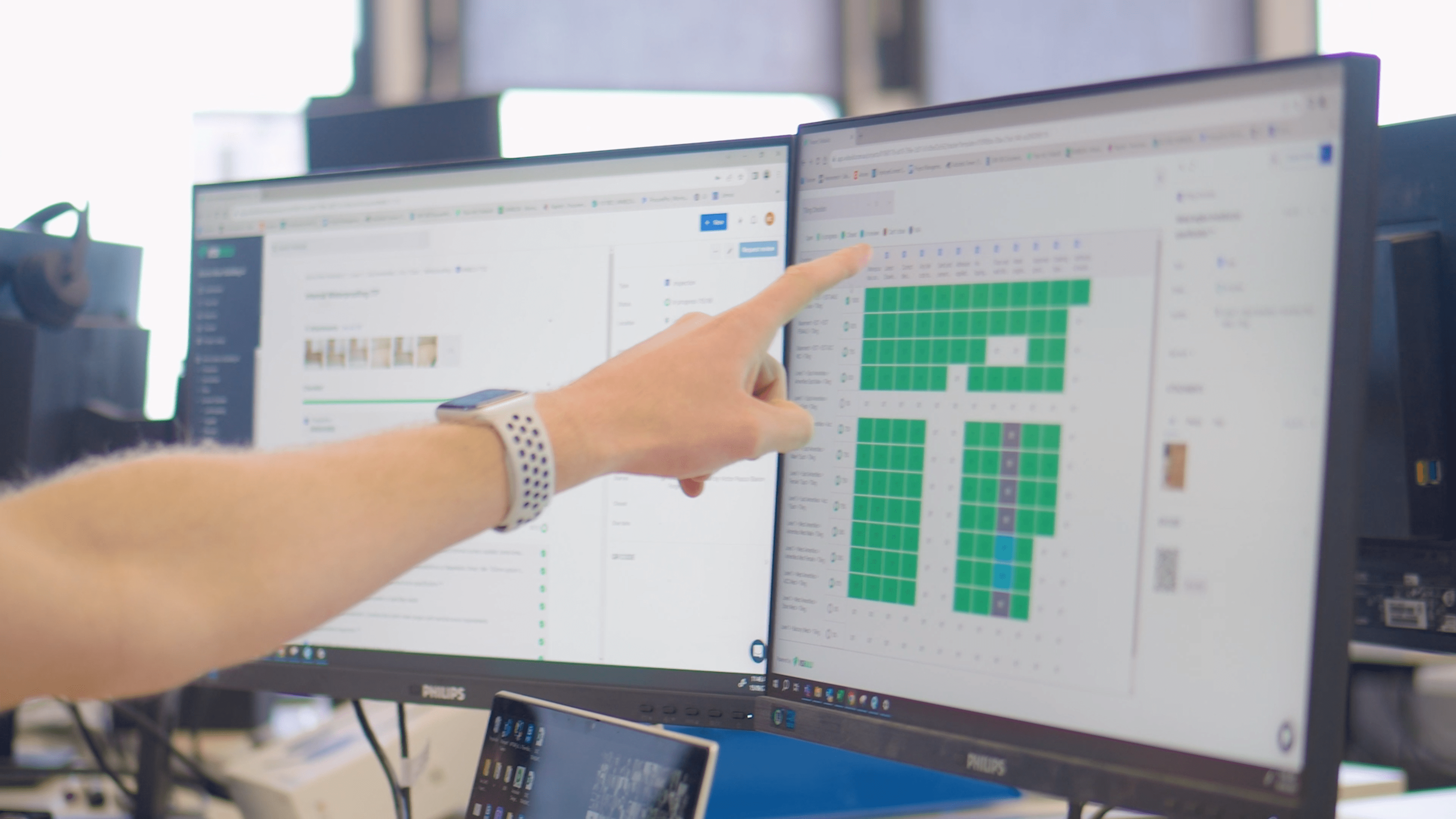

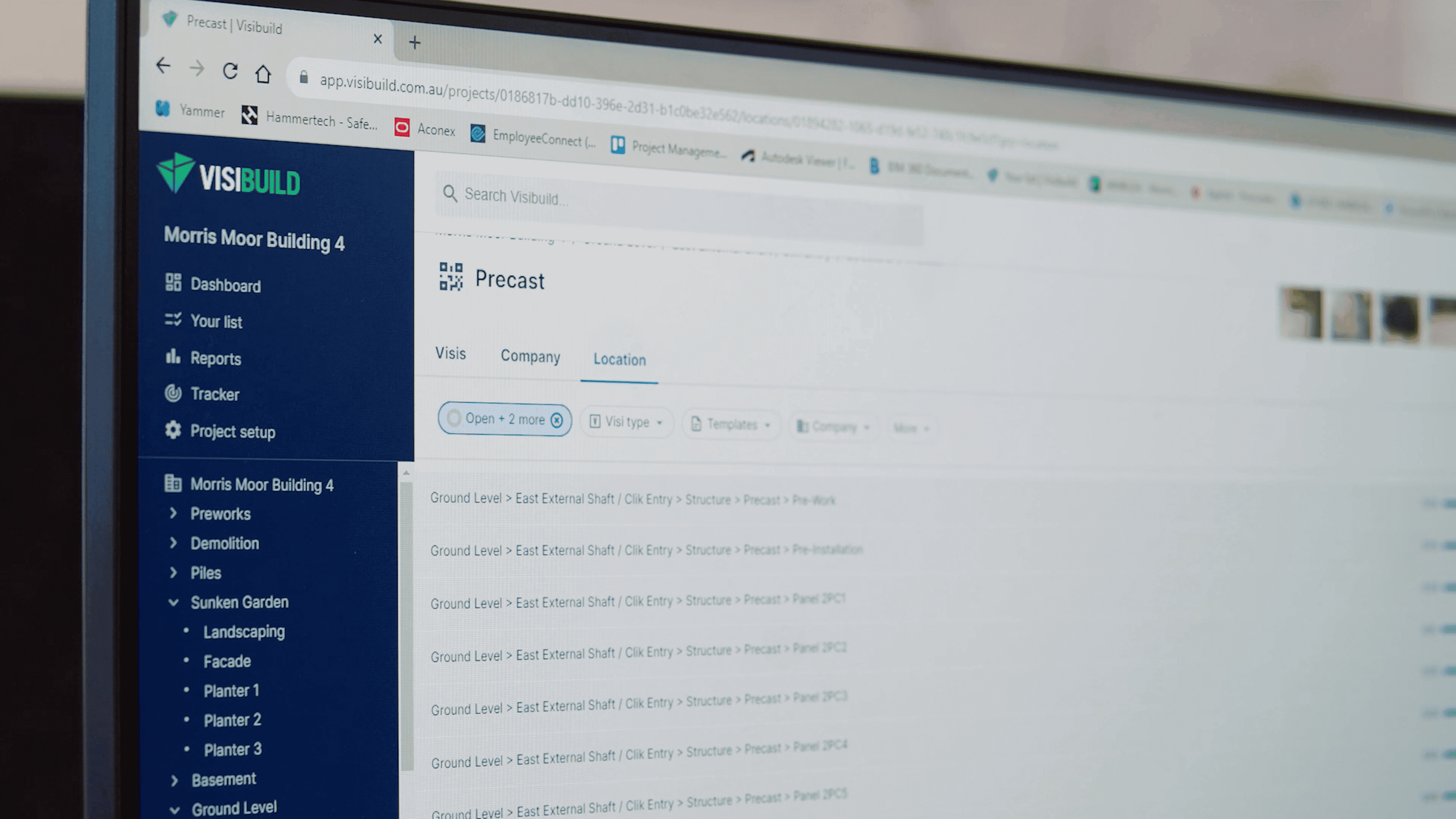
A benchmark for everything we do, our Quality Assurance approach is underpinned by digital applications that allow us to share in real time how we’re performing with our clients, improving transparency and visibility while allowing us to continually improve how we work and deliver our projects.
Bidoura Mosharraf, Quality CoordinatorWHAT YOU SEE IS WHAT YOU GET WITH KAPITOL. HIGH QUALITY PROJECTS PLANNED, DIGITALLY DESIGNED AND DELIVERED BY HIGH QUALITY PEOPLE
The advantage of being a new builder in an established industry is being unrestricted by the legacy structures that are no longer fit for purpose. Instead, we continually test new systems to improve how we work. Take our construction software, it allows us to identify and fix issues in minutes, not days. Every step is logged so it can be reviewed and shared to benefit future projects.
Quality Assurance (QA) is a proactive, process-oriented approach focused on preventing defects and issues before they occur. It involves establishing rigorous systems, procedures, and standards (like ISO certification) that ensure the work is done correctly. Quality Control (QC) is a reactive, product-oriented approach focused on inspecting the completed work to verify it meets defined standards and specifications. Both form critical, complementary parts of a comprehensive Quality Management System.
Modern Quality Management Systems leverage digital applications and cloud-based software to log all quality checks, inspections, non-conformances, and corrective actions in real time. This data is often presented through custom dashboards, providing project stakeholders (including the client) with instant, unprecedented transparency into project performance, compliance status, and documentation health. This level of visibility builds trust and allows for immediate, informed decision-making.
External certification, such as adherence to the international standard AS/NZS ISO 9001:2016, provides a framework for implementing a robust, globally recognised Quality Management System. It demonstrates a contractor's commitment to delivering consistent quality, enhancing customer satisfaction, and promoting continual improvement. For clients and partners, it serves as an essential third-party verification that the contractor's processes and quality principles are systematically managed and audited to the highest standard.
The relationship between Time, Cost, and Quality is often referred to as the "Triple Constraint" or "Quality Triangle," implying that improving one often compromises another. Effective management of this balance requires proactive, integrated planning. By using digital tools like BIM/Digital Engineering to eliminate design errors early, the risk of costly rework and schedule delays is minimised. This allows the contractor to achieve efficient scheduling and budget alignment without compromising the required level of quality.
Robust documentation, which includes detailed Inspection and Test Plans (ITPs) and digital log records, is crucial for both immediate compliance and long-term asset value. For the project phase, it serves as the legally compliant record that all construction meets specifications. Post-handover, this comprehensive documentation acts as the foundational knowledge for facility management, maintenance planning, and future renovations, ensuring the owner has an accurate and verifiable record of their constructed asset.
Quality assurance in building construction is embedded from early design to handover, with systems to prevent issues and digital tools tracking project performance, aligning closely with consultants and clients. We pair this with rigorous quality control in building construction, monitoring workmanship, materials and compliance—achieving the balance of time cost quality in construction, where efficient scheduling, budget alignment and outcomes go hand in hand.
